
Clay soils present a brutal mechanical environment for fruit tree root systems. The microscopic, plate-like particles that comprise clay compress tightly under rainfall and equipment traffic, collapsing the pore spaces required for gas exchange. When water enters this profile, capillary forces bind it tightly, filling the voids that normally supply oxygen to root tissues. Growers working in heavy soils face a recurring dilemma: standard seedling selections suffocate, drown, or succumb to waterborne fungal pathogens within three to four years of planting.
Remediating five acres of dense clay through subsoiling and organic amendments is expensive, labor-intensive, and often impermanent. A more durable foundation begins below ground with rootstock genetics. Certain rootstocks tolerate anaerobic conditions, resist crown-rot pathogens, and push taproots through dense subsoils where others stall. Selecting the proper rootstock architecture transforms heavy ground from a site liability into a stable production block.
Clay Soil Mechanics and Root Asphyxia
Soil pore space divides into macropores and micropores. Sandy soils possess abundant macropores that drain freely under gravity, allowing atmospheric air to cycle down to root depth. Heavy clay soils consist predominantly of micropores. While clay retains substantial nutrient volume due to its high cation-exchange capacity, its hydraulic conductivity is exceptionally low, frequently measuring under 1.5 millimeters per hour. When saturation occurs, gravitational drainage slows to a crawl, creating a perched water table in the top 40 centimeters of soil.
Root asphyxia begins within hours of continuous saturation. Apple, pear, and stone fruit roots require ambient oxygen levels above 10% in the soil atmosphere to sustain aerobic respiration. When saturated conditions drop oxygen concentrations below 2%, root cellular respiration shifts from oxidative phosphorylation to anaerobic fermentation. This metabolic pathway produces ethanol, lactic acid, and acetaldehyde as byproducts. These toxic compounds accumulate rapidly within root tip cells, leading to membrane leakage, tissue collapse, and rapid root death.
Secondary decline follows cellular asphyxiation. Opportunistic oomycetes such as Phytophthora cactorum and Pythium species produce motile zoospores that navigate through free soil water. Attracted by chemical exudates leaking from dying, suffocated root tips, these pathogens penetrate the root epidermis and advance into the vascular cambium. In heavy ground, a tree rarely dies from drowning alone; it drowns first, and waterborne pathogens consume the damaged tissue second.
Pome Fruit Rootstocks for Heavy Ground
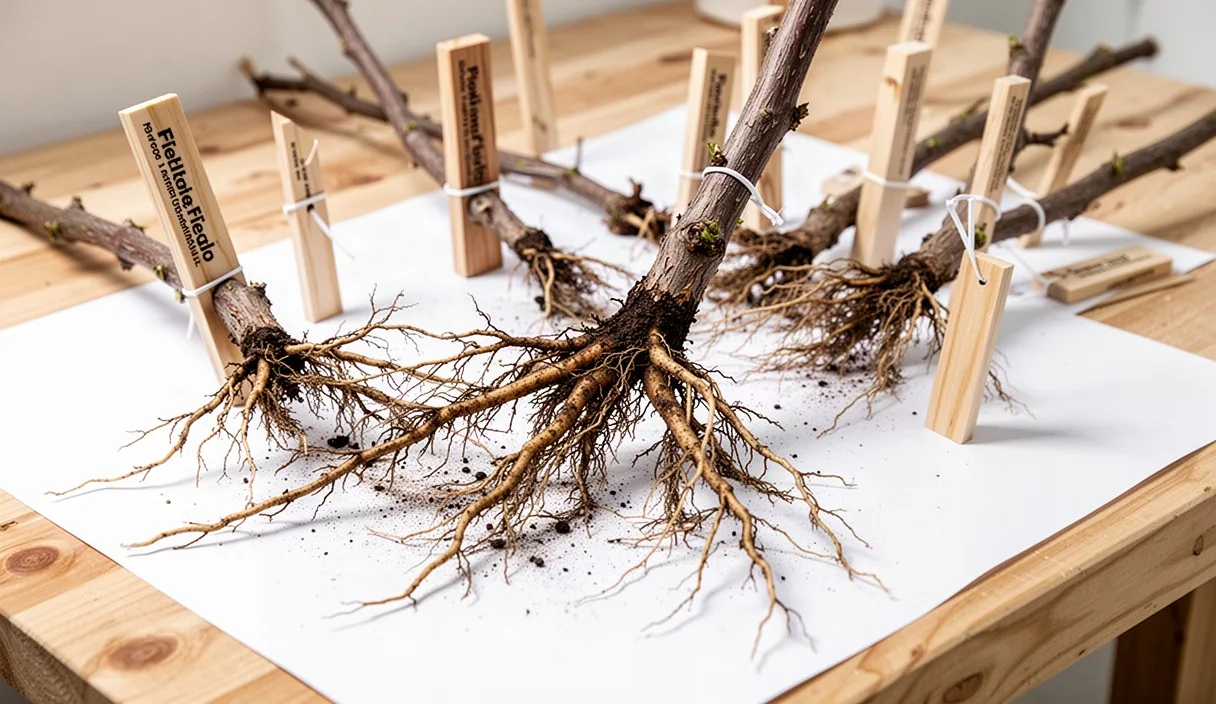
Apples and pears exhibit varying tolerance to clay based on the evolutionary background of the rootstock parents. Standard seedling rootstocks (Malus domestica) produce sprawling, inconsistent root systems that rot readily in slow-draining depressions. Modern clonal rootstocks offer predictable vigor, precocity, and distinct structural responses to compacted ground.
In apples, the Geneva series developed by Cornell University and the USDA Agricultural Research Service outperforms older Malling-Merton selections in heavy soils. Rootstocks like G.890 and G.214 combine vigorous anchor roots with strong genetic resistance to Phytophthora. Conversely, MM.106, while physically capable of penetrating dense subsoil, is extremely susceptible to collar rot and should never be planted in wet clay. M.9 can survive in heavy clay if planted on raised berms, but its brittle root structure struggles to anchor trees when saturated clay turns plastic and loses shear strength during autumn windstorms.
For European and Asian pears, quince (Cydonia oblonga) rootstocks such as Quince A and Quince BA29 provide dwarfing traits but display poor anchorage and severe sensitivity to prolonged saturation. The Old Home x Farmingdale (OHxF) series of clonal Pyrus communis rootstocks provides the standard for wet, heavy soils. OHxF 87 and OHxF 97 develop spreading root architectures that explore heavy clay profiles without rotting, maintaining physiological function during wet spring weather.
| Rootstock | Crop | Vigor Category | Clay Tolerance | Phytophthora Resistance |
|---|---|---|---|---|
| Geneva 890 | Apple | Semi-Dwarf (65%) | High | High |
| Geneva 41 | Apple | Dwarf (35%) | Moderate | High |
| MM.111 | Apple | Semi-Standard (85%) | Moderate to High | Moderate |
| MM.106 | Apple | Semi-Dwarf (60%) | Very Low | Low |
| OHxF 87 | Pear | Semi-Dwarf (70%) | High | High |
| Quince BA29 | Pear | Dwarf (50%) | Low | Moderate |
Stone Fruit Rootstocks for High Moisture
Stone fruits (genus Prunus) are notoriously intolerant of wet ground. Standard peach seedlings like Lovell, Halford, and Nemaguard die after as little as 72 hours of waterlogging during active spring growth. Root crowns quickly blacken, emit a sour odor, and drop all foliage. Establishing stone fruits in heavy clay requires deploying plum genetics as a root bridge.
Plum species naturally inhabit riparian corridors and soils subject to seasonal inundation. Prunus cerasifera (Myrobalan) and Prunus insititia (St. Julien) supply the genetic tolerance needed to sustain peaches, nectarines, apricots, and plums in heavy soils. Myrobalan 29C produces an extensive, aggressive root system capable of pushing through slick clay pans. It tolerates prolonged winter waterlogging without losing vascular integrity, though it produces occasional root suckers under physical stress.
Inter-specific hybrids bridge the compatibility gap between wet-tolerant plums and commercially demanding scions. Krymsk 86, a cross between Prunus cerasifera and Prunus persica, provides an exceptional base for almonds and peaches in heavy soils. It anchors firmly, resists asphyxia, and maintains strong root cohesion in soils with more than 40% clay fraction. Citation, a peach-plum hybrid, offers high tolerance to spring saturation and induces early dormancy, but it can induce early decline if drought follows heavy winter saturation.
Cherries present an equal challenge on wet sites. Mazzard seedlings and modern Gisela dwarfing stocks (such as Gisela 5 and Gisela 6) deteriorate rapidly in heavy ground prone to standing water. The interspecific rootstock Colt (Prunus avium x Prunus pseudocerasus) demonstrates the highest survival rate for cherries on poorly drained clay, developing a fibrous root mass that remains functional throughout wet springs.
| Rootstock | Compatible Scions | Relative Vigor | Saturation Tolerance | Anchorage Quality |
|---|---|---|---|---|
| Myrobalan 29C | Plum, Apricot | Standard (100%) | High | High |
| St. Julien A | Peach, Plum, Apricot | Semi-Dwarf (70%) | High | Moderate |
| Krymsk 86 | Peach, Almond, Apricot | Standard (100%) | High | Very High |
| Lovell | Peach, Nectarine | Standard (100%) | Very Low | High |
| Colt | Sweet and Tart Cherry | Standard (95%) | High | High |
| Gisela 5 | Sweet Cherry | Dwarf (45%) | Low | Moderate |
Graft Union Height and Collar Rot Prevention
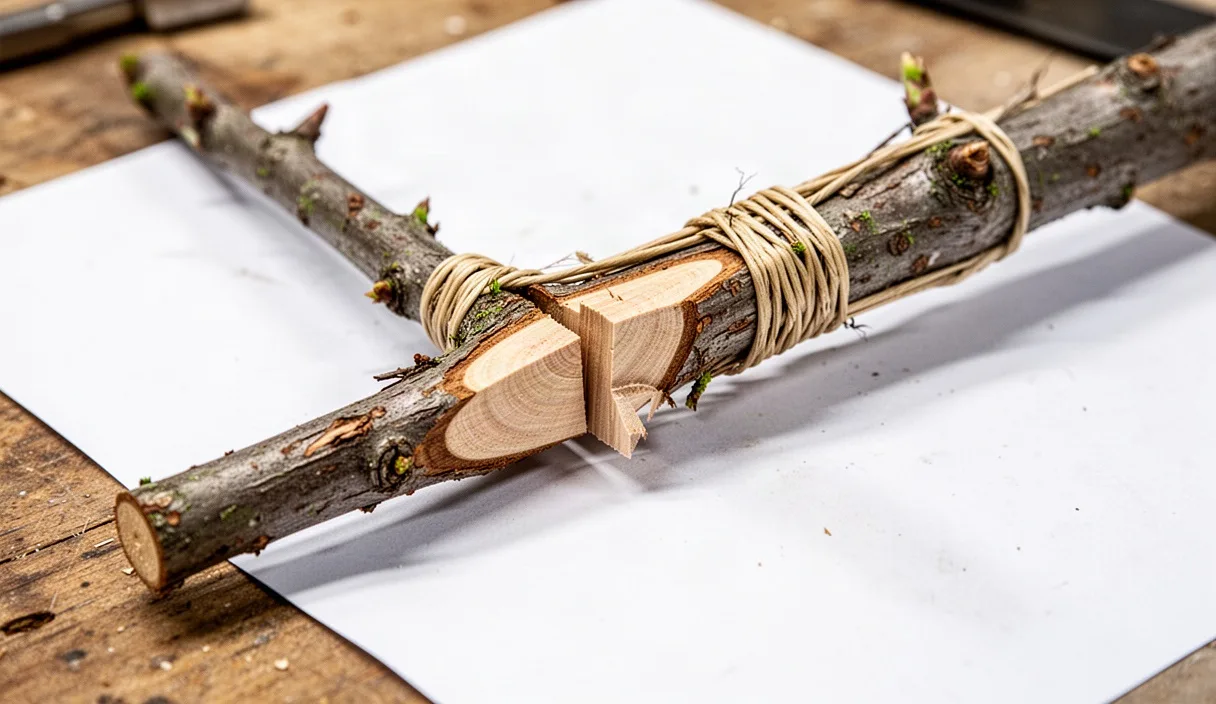
Selecting a tolerant rootstock addresses root-level survival, but the junction between rootstock and scion represents an acute point of vulnerability. Collar rot, caused by Phytophthora cactorum and related species, attacks the base of the trunk where barking tissues meet the soil surface. Even when an apple tree sits on an immune Geneva rootstock, the commercial scion variety grafted onto it (such as Honeycrisp, Gala, or Fuji) remains genetically susceptible to infection.
Planting depth dictates collar rot incidence. In light soils, growers frequently plant trees with the graft union only 5 to 7 centimeters above the soil line to limit rootstock suckering. In heavy clay, this practice invites disaster. Wet clay splashes during heavy rainstorms, coating the lower trunk with pathogen-laden mud. Furthermore, the settled soil line in heavy clay can easily submerge a low graft union, causing the scion to send out its own roots. Once the scion roots into the clay, it bypasses the rootstock entirely, loses its dwarfing effect, and succumbs to waterborne rot.
Maintain the graft union between 12 and 18 centimeters above the finished soil grade at planting. This height ensures that even after the tree settles into the planting furrow, the union remains out of the splash zone. When working in flat clay terrain with poor lateral drainage, combine this higher graft exposure with raised beds or continuous planting berms. Construct berms 25 to 35 centimeters high and 1.2 meters wide. Berming moves the sensitive root crown above the perched water table, forcing primary lateral roots to develop in an aerated surface horizon while deeper anchor roots exploit the underlying clay.
Performance Records Across Five-Year Trials
Long-term rootstock research demonstrates wide divergence in survival and production efficiency under wet, fine-textured soil conditions. Multi-site uniform trials evaluate mortality, trunk cross-sectional area (TCA), and cumulative yield over multi-year evaluation periods.
Data from trials conducted on heavy silt clay loam soils demonstrate the vulnerability of historical standards compared to targeted selections. Over a continuous five-year trial period in heavy ground, apple rootstock survival rates illustrate distinct mortality cliffs:
- Geneva 890: 94% tree survival rate. Average trunk cross-sectional area reached 48 square centimeters. Trees maintained balanced shoot growth and demonstrated zero losses to crown rot.
- Geneva 41: 88% tree survival rate. TCA averaged 26 square centimeters. Tree loss was linked to graft union breakage during high winds rather than root asphyxia or rot.
- Mailing 9 (T337): 68% tree survival rate. TCA averaged 21 square centimeters. Mortality stemmed from combined waterlogging stress followed by secondary winter injury to weak root systems.
- MM.106: 31% tree survival rate. Most losses occurred between years three and four following an unseasonably wet spring, with clear symptoms of Phytophthora cactorum cankers at the soil line.
Stone fruit trials on heavy clay soils reveal even sharper divisions over a five-year monitoring cycle. In trial blocks evaluating peach scions on various understocks in poorly drained clay soils, rootstock choice directly dictated orchard viability:
- Krymsk 86: 91% survival rate. Maintained annual shoot extension of 35 to 45 centimeters, with heavy fruit set by year three and excellent mechanical stability without trellising.
- St. Julien A: 83% survival rate. Induced moderate vigor and high fruit sizing, though yield efficiency dropped in year four due to slight iron chlorosis induced by prolonged saturation in alkaline clay.
- Lovell Seedling: 18% survival rate. The block suffered catastrophic decline during the second spring when continuous saturation lasted for twelve consecutive days. Dead trees exhibited complete root necrosis and bark peeling below the soil line.
Common Mistakes
Growers confronting heavy clay soils frequently compound their difficulties through mechanical errors during site prep and planting. Avoid these widespread mistakes:
- Digging polished planting holes: Using an auger in wet clay creates smooth, glazed clay sidewalls. These hard edges act as an impenetrable subterranean pot, trapping water inside the hole while roots circle the perimeter instead of penetrating the native soil. Use a shovel to score and scarify the sides of augered holes, or rip rows with a subsoiler instead.
- Amending the planting hole with rich organic matter: Backfilling a clay planting hole with peat moss, compost, or potting soil creates a hydraulic sponge. Water flows freely through the amended fill and stops dead when it hits the dense, undisturbed clay perimeter. The tree spends the winter sitting in a submerged basin. Always backfill with the native soil taken from the hole.
- Installing surface drip lines directly against the trunk: In low-permeability soils, water pools directly under emitters. If a drip emitter rests against the trunk, the crown remains perpetually damp. Position emitters at least 30 centimeters away from the trunk, shifting them outward toward the dripline as the tree matures.
- Compacting wet rows with heavy machinery: Driving tractors down orchard rows when clay is at field capacity destroys soil structure down to 60 centimeters deep. This creates plow pans that stop vertical drainage completely, turning an ordinary clay profile into an impermeable barrier.
Practical Next Steps
Before ordering nursery stock or setting trees into the field, assess the true drainage dynamics of your soil. Field conditions change drastically across subtle grade shifts.
- Perform a formal percolation test: Dig three test holes 40 centimeters deep across your planting block. Fill them with water and let them saturate overnight. Refill them the following morning and measure the drop in water level every hour. If water drops less than 1.5 centimeters per hour, you are dealing with poorly drained conditions that necessitate water-tolerant rootstocks and raised berms.
- Map soil textures across depth horizons: Use a soil auger to inspect the profile down to 90 centimeters. Note the depth where grey, bluish, or heavily mottled clay appears. These colors indicate gleying, a chemical condition proving that the soil remains anaerobic for extended periods of the year.
- Construct permanent berms in the autumn: Throw up planting mounds or continuous berms six months before planting bare-root trees. This allows winter rain and freeze-thaw cycles to settle the soil naturally, preventing air pockets and uneven settling after trees are installed.
- Place your nursery orders early: Specialty rootstocks like OHxF 87, Krymsk 86, and specific Geneva clones frequently sell out 12 to 18 months ahead of delivery. Commercial nurseries prioritize large block reservations, so secure your rootstock-scion combinations well in advance.
- Consult agricultural extension engineers for severe sites: If your soil combines dense clay with a high surface water table that fails to drain over weeks, rootstock selection alone cannot solve the problem. Consult an agricultural drainage specialist to evaluate the feasibility of installing subsurface corrugated tile drains before planting high-density blocks.