
Fire blight, caused by the enterobacterium Erwinia amylovora, destroys productive pome fruit orchards faster than almost any other temperate tree pathogen. While post-bloom damage presents as unmistakable scorched foliage and hooked shoot tips, waiting for those classic signs guarantees systemic vascular spread. Once the bacterium enters the structural wood of a scaffold branch or the central leader, saving the tree requires aggressive, destructive surgery that removes years of canopy development.
Stopping this pathogen requires identifying strikes while the bacteria remain confined to the floral anatomy. Blossom infection occurs when colonizing populations on the stigmas wash down into the hypanthium through open nectar cups. By reading orchard microclimates accurately and inspecting the floral cluster daily during bloom, managers can intervene days before natural blossom drop occurs, preserving tree structure and preventing catastrophic rootstock blight.
Microclimate Triggers for Blossom Infection
The transition from harmless epiphytic presence to destructive tissue invasion hinges on specific temperature and moisture thresholds. Erwinia amylovora does not divide significantly below 10 degrees Celsius, but its doubling time drops rapidly as ambient temperatures rise between 18.3 and 29 degrees Celsius. Predictive models such as Maryblyt and Cougarblight quantify this risk by tracking degree hours above 18.3 degrees Celsius accumulated while flowers are open with receptive stigmas. If an orchard accumulates more than 110 degree hours over a rolling three-day window, bacterial populations on individual flower stigmas can easily exceed 100,000 cells.
Temperature alone cannot initiate internal infection. The bacteria require liquid water to wash the colonies from the stigmas into the nectaries at the base of the flower cup. A rainfall event as light as 0.25 millimeters, or a heavy morning dew lasting at least two hours, provides the aquatic pathway the pathogen needs to penetrate the floral tissue. Relative humidity exceeding 80 percent preserves nectar liquidity, keeping open the window of vulnerability. Overhead irrigation during this bloom period presents an immediate, artificial infection event and must be avoided.
Orchard topography creates microclimate pockets that violate regional weather forecasts. Low spots, bottoms of swales, and rows adjacent to tall windbreaks trap cold, moist air in the morning and build heat during sunny afternoons without sufficient air circulation. These zones often meet the biological threshold for blossom infection 24 to 48 hours earlier than elevated, well-ventilated ridges in the same block. Field scouts must prioritize these sheltered, moisture-retaining sections when monitoring bloom stages and local leaf wetness sensors.
Visual Diagnostics: Petals, Spurs, and Canes
Detecting fire blight before blossom drop demands close inspection with hand lenses rather than scanning the canopy from an orchard tractor. The initial symptom on a colonized blossom is an uncharacteristic water-soaked appearance on the floral receptacle and pedicel. Rather than maintaining a crisp, light-green exterior, the base of the flower takes on a dull, bruised green cast. This water-soaking occurs within 48 to 72 hours of cellular invasion, well before the petals begin to shed naturally.
As the bacteria multiply inside the floral xylem and parenchyma, they exude a polysaccharide-rich slime. Under humid conditions, inspect the pedicel and the hypanthium for tiny, translucent droplets. These droplets begin milky or clear and oxidize within hours into an amber or honey-colored bead. Any droplet appearing on a flower stem during warm weather is a decisive diagnostic marker for Erwinia amylovora. Frost damage and blossom blast caused by Pseudomonas syringae cause tissue collapse, but they do not produce these sticky bacterial exudates.
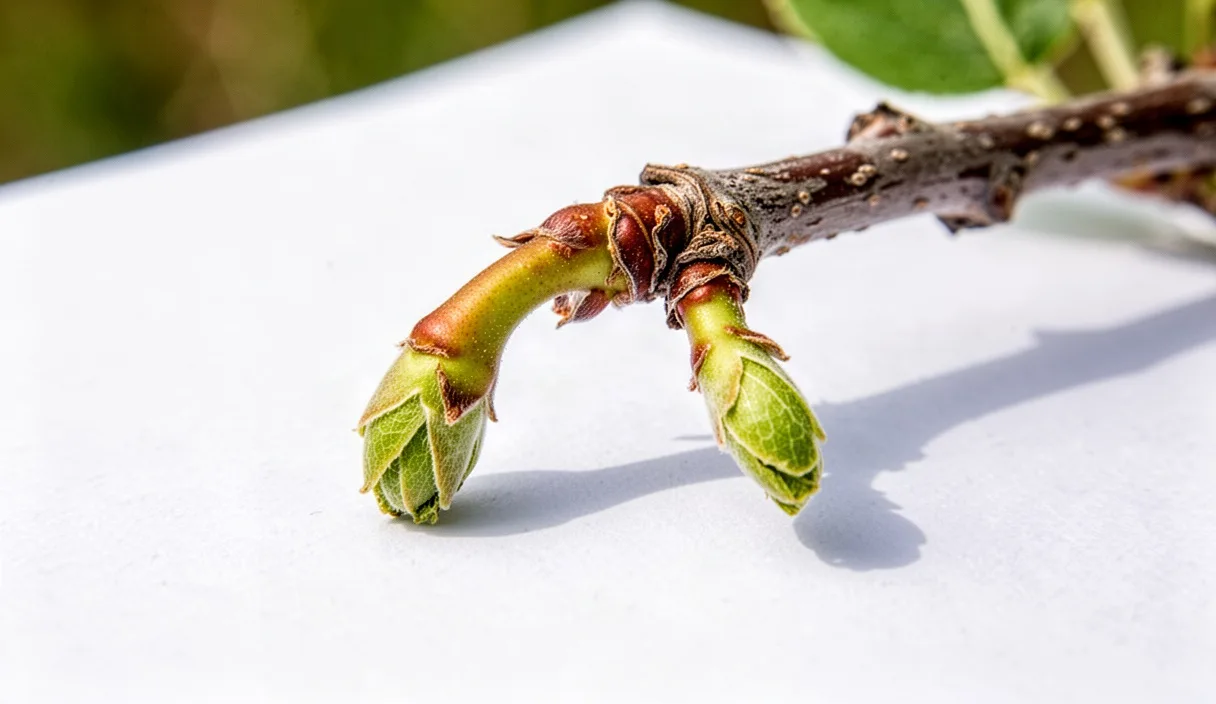
Once the infection travels down the pedicel into the spur leaf cluster, the cluster base darkens to an oily olive green before turning deep brown on apples or charcoal black on pears. In early stages, the petals do not drop off cleanly; instead, they wilt in place and cling to the dying receptacle. If the pathogen reaches the vegetative shoot emerging from the same spur, the shoot tip wilts under transpiration stress, forming the downward curve known as a shepherd's crook. Catching the infection before this crook forms marks the difference between snipping off an individual spur and sawing through a structural limb.
| Tissue Part | Healthy Blossom Cluster | Early Erwinia Blossom Strike | Frost or Pseudomonas Injury |
|---|---|---|---|
| Petals | Turgid, white to pink, drop cleanly upon maturity | Wilting, dull, clinging tenaciously to receptacle | Brown margins, papery texture, shed irregularly |
| Pedicel | Uniform green, firm, dry surface | Water-soaked, dull olive-brown, carries amber ooze | Blackened, dry, shriveled without bacterial ooze |
| Spur Leaves | Expanding, bright green, turgid | Vein darkening, localized water-soaking at the petiole | Uniform edge burn, necrotic spotting across blade |
| Internal Wood | Clean white to pale green vascular ring | Reddish-brown striations beneath bark tissue | Superficial browning limited to epidermal cells |
Sanitary Pruning Protocols and Cut Distances
When an active blossom strike is confirmed, remove the affected tissue immediately during dry weather. Delaying removal allows bacteria to migrate downward through the phloem at rates exceeding 25 millimeters per day in succulent, vigorous trees. The primary rule of strike removal is to cut far beneath the lowest visible symptom. Erwinia amylovora moves invisibly through internal tissue well beyond the darkened, necrotic margin of the canker.
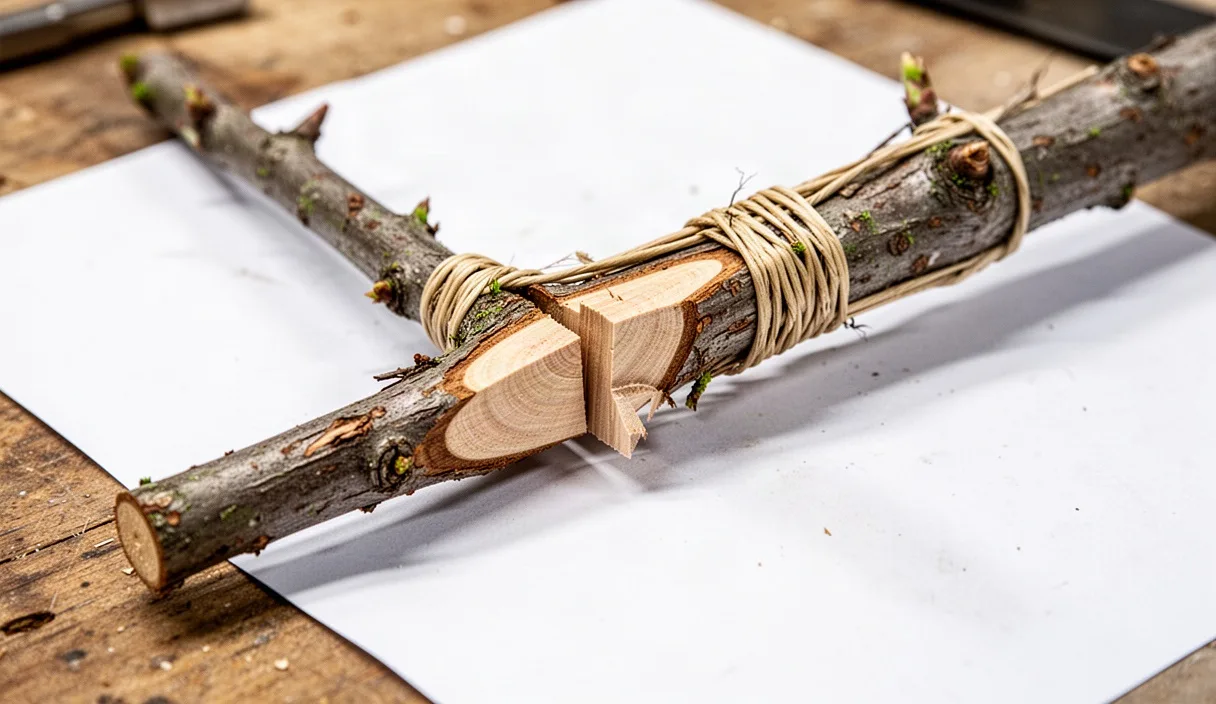
Make all sanitary cuts a minimum of 30 to 45 centimeters into healthy, symptom-free wood below the visible margins of the infection. In younger, high-vigor blocks grafted onto sensitive dwarfing rootstocks like M.9, increase this safety distance to 60 centimeters if branch anatomy permits. If cutting back 45 centimeters requires removing a junction down to a major scaffold branch or the central leader, cut back to the next structural branch union rather than leaving an unviable branch stub that the bacteria can easily traverse.
Orchard managers must utilize the ugly stub technique on non-structural limbs. Instead of making a smooth, flush cut at the branch collar, deliberately leave an exposed stub of 10 to 15 centimeters beyond the supporting branch. If the pathogen survives in the remaining tissue after the cut, the bacterial canker will form in this sacrificial stub during midsummer rather than moving straight into the main trunk. Paint or tag this stub with high-visibility spray paint so crews can prune it flush during the following dormant season after the tree has entered rest and the bacterial population has collapsed.
Disinfectant Standards for Field Pruners
Pruning tools serve as effective vectors for orchard-wide mechanical inoculation if not sterilized constantly. Merely dipping a pair of hand shears into a bucket of dirty solution does not kill bacterial cells protected by organic debris and sap. Tool hygiene protocols must dictate the precise chemical agent, proper concentration, and an adequate wet contact time between every single cut.
Choose an appropriate chemical standard based on corrosion risk and kill speed:
- Isopropyl alcohol (70 percent concentration): Ready to use without dilution. It does not corrode carbon-steel pruning blades and penetrates oily residues quickly. Keep tools wet for a minimum contact time of 30 seconds between cuts. Never dilute 70 percent stock, as lower concentrations fail to reliably denature bacterial proteins.
- Sodium hypochlorite (diluted household bleach): Prepare a 10 percent volume-to-volume dilution of standard commercial bleach (producing roughly 0.5 percent to 0.6 percent active sodium hypochlorite). This solution provides rapid biological kill within 10 to 15 seconds of contact. However, it severely corrodes cutting edges and degrades quickly in sunlight or when contaminated with soil. Mix a fresh batch every four hours, and oil pruners thoroughly at the end of each shift.
- Quaternary ammonium compounds: Stable in sunlight and non-corrosive to tools, making them well-suited for commercial crews carrying belt scabbards. Follow product labels to achieve a 1,000 parts per million active solution, requiring a 60-second contact dwell time to neutralize bacterial cells.
Equip field workers with dual-sheath scabbards containing disinfectant reservoirs, or carry squeeze bottles calibrated to flood both blades thoroughly. If workers are moving rapidly down high-density plantings, issue each worker two pairs of pruners: one shears soaks in the disinfectant holster while the worker operates the alternate tool. This simple equipment rotation guarantees the required contact time without slowing pruning speed.
Documenting Outbreak Rows for Selective Culling
Eradicating fire blight requires spatial record keeping to identify repeat strikes and systemic movement toward rootstocks. Relying on worker memory guarantees that damaged, lingering trees will slip through unnoticed to become active canker sources the following spring. Every orchard block must have a dedicated tracking ledger, whether kept on paper plot sheets or via mobile GPS mapping applications.
Record every strike by row number, tree position, rootstock variety, and date of removal. Classify strikes into two operational categories: terminal or spur strikes limited to two-year-old wood, and structural strikes that enter three-year-old wood, scaffold limbs, or the central leader. A tree sustaining multiple structural strikes in a single season loses its canopy balance, yields poorly, and poses an ongoing hazard to neighboring trees. Mark structural strike trees with durable, weatherproof surveyor tape around the trunk at eye level.
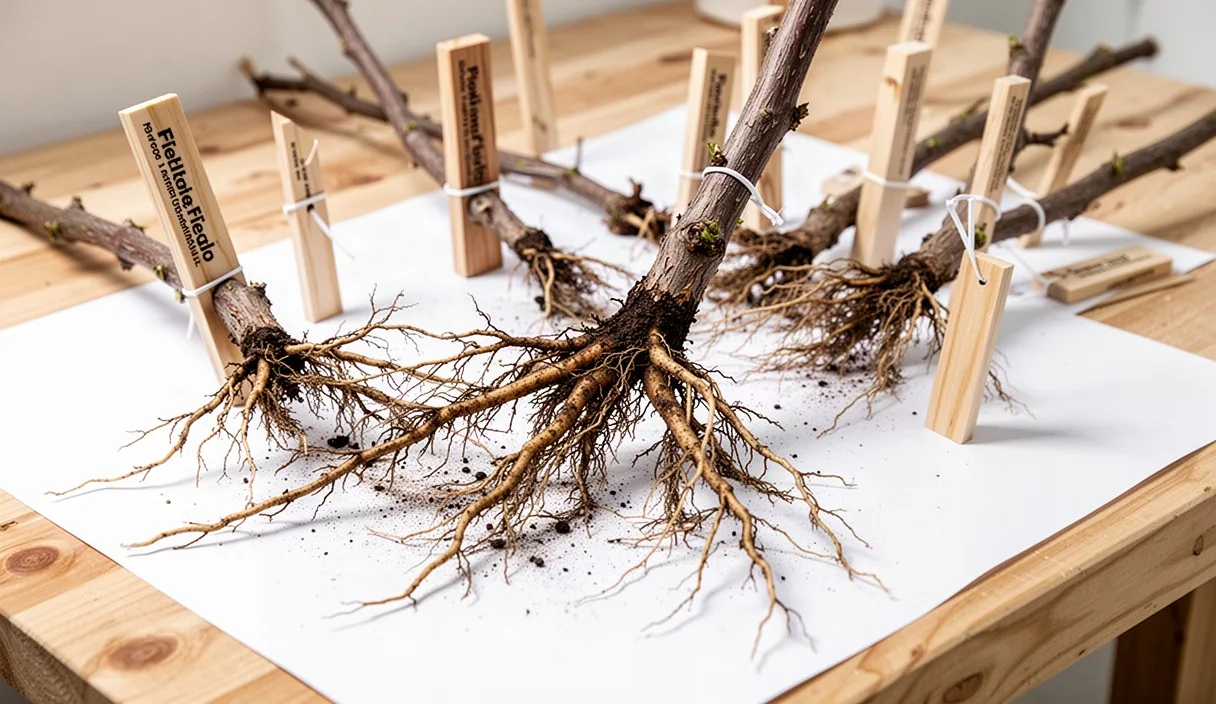
Scion strikes that travel systemically into susceptible rootstocks (such as M.9, M.26, or Geneva series selections that have not demonstrated full blight immunity under extreme pressure) require complete tree removal. Rootstock blight manifests as a dark, water-soaked, or cracked area of bark on the rootstock shank below the graft union, frequently exuding amber drops near the soil line. Pruning the scion cannot save a tree once rootstock tissue becomes infected. Mark these trees for immediate uprooting, burn the wood off-site, and note the open space on the orchard map to monitor neighboring rootstocks throughout the summer.
Common Mistakes to Avoid
Even well-intentioned strike intervention can amplify an outbreak if field crews commit basic operational errors. Audit field crews to eliminate these practices:
- Pruning during rain, fog, or dew: Free moisture on leaves and bark carries dislodged bacterial cells straight into fresh pruning wounds. Pruning shears must never touch the orchard canopy while free water rests on the leaves.
- Making flush cuts near the trunk: Attempting to create an aesthetically neat cut removes the protective wood barrier. Always leave an ugly stub of 10 to 15 centimeters to capture any secondary colonization.
- Neglecting cut material on the orchard floor: Severed twigs with active blossom strikes continue exuding infectious bacterial ooze for several days. Do not drop infected branches into row middles; carry heavy plastic collection bins and incinerate or bury all cut tissue off-site.
- Wiping blades instead of soaking them: Wiping a pruner with a dry rag merely spreads the sticky bacterial slime across the steel surface. Blades must stay saturated with the sterilizing solution for the full contact window specified by the chemical protocol.
Immediate Action Steps for the Orchard Block
Take concrete actions based on the immediate developmental stage of your trees:
- Calculate local degree hours: Review on-site temperature data over the past 72 hours. If accumulation above 18.3 degrees Celsius has exceeded 110 degree hours and moisture has occurred, assume blossom infection has initiated.
- Halt nitrogen applications: Immediately cancel planned fertigation or ground-applied nitrogen programs. High tissue nitrogen levels promote rapid vegetative shoot growth, which accelerates bacterial transit inside the vascular system.
- Walk low-lying blocks with a 10x hand lens: Inspect spur clusters in low, humid swales. Look specifically for water-soaked, olive-green pedicels, retained limp petals, and clear or amber fluid beads at the base of the flower cups.
- Deploy dedicated pruning crews: Mobilize trained workers equipped with two sets of pruners and 70 percent isopropyl alcohol or fresh 10 percent sodium hypochlorite. Mandate cuts placed 30 to 45 centimeters below any visible discoloration, leaving a marked ugly stub.
- Review chemical controls with an extension specialist: If regional risk models show high infection potential and fresh strikes appear while late bloom remains open, consult a licensed agronomist or local agricultural extension agent to verify whether an immediate biological or chemical blossom spray fits your regulatory district and resistance management guidelines.