
Uniform seedling emergence is rarely an accident of good soil or timely watering. In commercial and conservation nurseries, emergence variations trace directly back to physical differences within the seed lot itself. When you sow unsorted seeds, you plant a collection of unequal energy reserves. Larger seeds carry expanded storage tissue that drives rapid radicle emergence and early photosynthetic capability, while smaller seeds lag by days or weeks. This split timeline introduces canopy competition within the flat or bed, suppresses smaller seedlings, and creates uneven stem calipers that complicate future field operations.
Calibrating seed size through mechanical screening and density grading brings order to seedling stands. By grouping seeds into narrow physical bands, you normalize the metabolic clocks of developing embryos. A disciplined grading protocol removes hollow, damaged, and underdeveloped seeds before stratification or sowing, eliminating the labor spent managing erratic flats. This guide outlines how to configure screen mesh sizes, execute flotation tests, run specific gravity separations, and synchronize the resulting growth for exact downstream production schedules.
Cotyledon Mass and Initial Growth Velocity
The cotyledons and the endosperm serve as the sole power source for a germinating embryo until its first true leaves establish autotrophic carbon fixation. The absolute dry mass of these storage tissues dictates the speed of initial cell division, hypocotyl elongation, and radicle penetration depth. When a seed imbibes water, stored starches, lipids, and proteins undergo enzymatic hydrolysis. A seed with 35 milligrams of endosperm tissue mobilizes nearly double the raw metabolic energy of an 18 milligram seed of the same species during the first 96 hours of post-dormancy growth.
This difference in storage volume creates an immediate split in emergence velocity. Seeds with greater cotyledon mass push through soil crusts faster and build early root systems that reach moisture reserves below the drying zone. Smaller seeds exhaust their internal resources closer to the surface. If their initial leaves do not breach the soil cap before their endosperm reserves fall below critical respiration thresholds, the seedlings stall or die from exhaustion. Even if they emerge, they do so beneath the shade cast by their larger cohort, which creates an enduring height disparity.
Field data from tree rootstock propagation demonstrates that initial cotyledon mass correlates with root collar diameter throughout the entire first growing season. Seedlings starting from the upper tier of cotyledon weight maintain an early vascular advantage: they develop broader xylem conduits, synthesize more endogenous auxins in their expanding apex, and establish mycorrhizal partnerships days ahead of their smaller counterparts. Sorting your seed lots by size is effectively a sorting of potential growth velocities.
Screen Mesh Selection for Stone and Pome Seeds
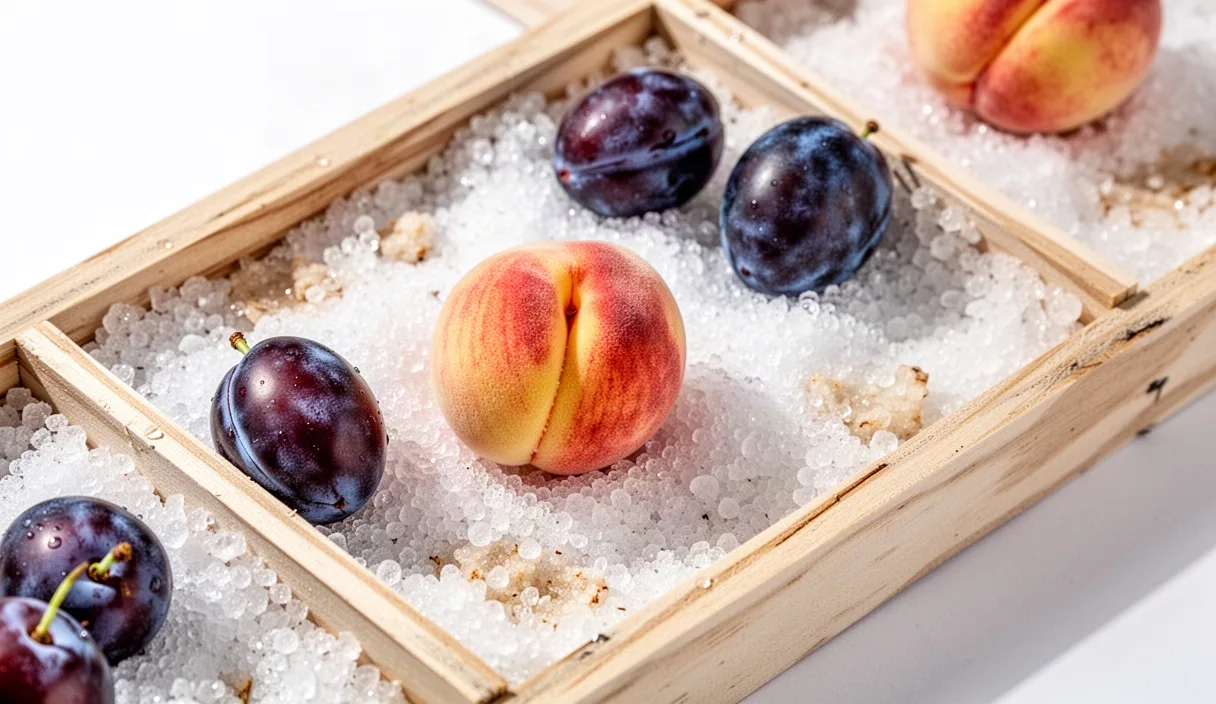
Mechanical grading relies on precision-perforated metal plates that divide seed lots by diameter and thickness. Stone fruits (such as peaches, plums, and cherries) present irregular, hard endocarps with grooved sutures, whereas pome fruits (such as apples, pears, and quinces) feature teardrop, flattened morphologies. These anatomical differences demand distinct screen geometries to prevent jamming and ensure accurate sorting.
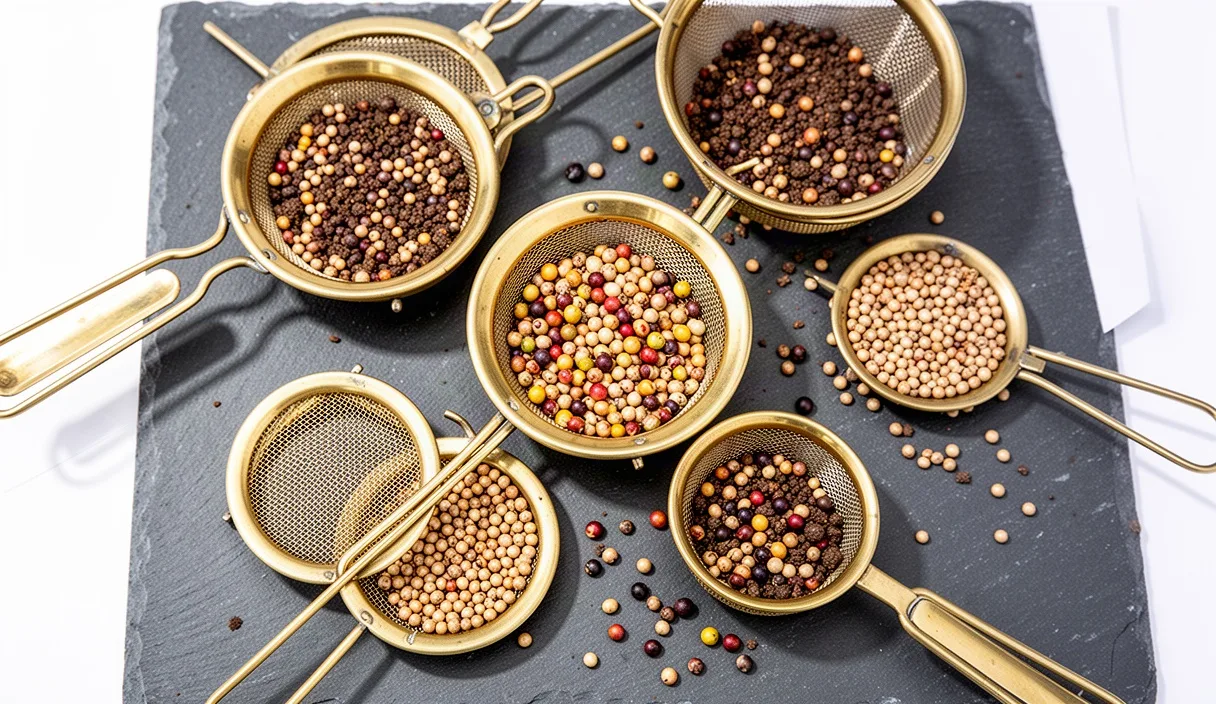
Pome seeds require slotted screens to measure seed thickness paired with round-hole screens to isolate length. A typical grading run for domestic apple seeds (Malus domestica) uses a sequential deck stack. The top deck carries a 4.8 millimeter round-hole perforation to catch debris and oversized twins, the middle deck uses a 3.2 millimeter slotted screen to retain the primary planting grade, and the bottom pan catches shriveled seeds that fall below 2.4 millimeters. For stone fruits like Prunus cerasifera (Myrobalan plum) or Prunus avium (Mazzard cherry), spherical round-hole screens with heavy gauge steel are mandatory to withstand the abrasive tumbling of clean pits.
| Fruit Category | Representative Species | Primary Screen Type | Primary Screen Dimensions | Discard Fraction Threshold |
|---|---|---|---|---|
| Pome Fruit | Malus domestica (Apple) | Slotted perforation | 3.2 mm x 19.0 mm | Below 2.4 mm width |
| Pome Fruit | Pyrus communis (Pear) | Slotted perforation | 2.8 mm x 15.8 mm | Below 2.1 mm width |
| Stone Fruit | Prunus avium (Mazzard Cherry) | Round-hole plate | 6.5 mm diameter | Below 5.2 mm diameter |
| Stone Fruit | Prunus persica (Peach) | Round-hole punch | 14.3 mm diameter | Below 11.0 mm diameter |
| Stone Fruit | Prunus cerasifera (Myrobalan) | Round-hole plate | 7.9 mm diameter | Below 6.3 mm diameter |
Screening operations must run at a moderate feed rate. Overloading a screen deck causes seeds to ride across the surface on top of one another, which carries small seeds straight into the primary grade bin without contacting the perforations. Adjust mechanical shakers to an oscillation speed that maintains a single, fluid layer of seeds across the entire working screen surface.
Flotation Testing for Internal Seed Voids
Mechanical screening separates seeds by external dimensions, but exterior size does not guarantee internal viability. Seeds frequently develop full-sized seed coats or endocarps that contain shriveled embryos, fungal pockets, or complete internal voids caused by poor pollination. Flotation testing uses the buoyant properties of internal air pockets to separate hollow husks from dense, fully filled seed units.
The baseline flotation test uses clean, non-chlorinated water maintained at room temperature, between 18 and 21 degrees Celsius. When dried seeds drop into the water bath, fully developed embryos sink because their tissue density exceeds the density of water (1.00 gram per cubic centimeter). Seeds with internal voids trap air pockets beneath the testa or endocarp, which lowers their overall specific weight and causes them to float on the meniscus.
- Pre-wetting the seed coat: Submerge the seed lot in water and stir briskly for 90 seconds. This action releases surface tension and dislodges external air bubbles clinging to fine seed hairs or rough endocarp sutures, which would otherwise cause viable seeds to float.
- Static settling: Allow the agitated liquid to come to a complete rest for 8 to 12 minutes. Pome seeds settle quickly, while thick-walled stone seeds may require up to 20 minutes for boundary layer stabilization.
- Skimming the surface: Use a perforated skimmer to remove every seed resting on the water surface or suspended in the upper 20% of the water column. These floaters represent the hollow and insect-damaged cohort.
- Recovering the sinkers: Drain the bottom layer through a fine collection sieve. Immediately spread these dense seeds across a drying screen under active airflow to remove exterior moisture and prevent premature imbibition or mold growth.
Never leave seeds submerged longer than the settling window requires. Prolonged soaking initiates metabolic hydration, leaches water-soluble gibberellins out of the embryo, and can suffocate internal tissues by depriving them of oxygen.
Batch Separation Protocols by Specific Gravity
Water flotation provides a crude binary split: those lighter than 1.00 gram per cubic centimeter and those heavier. However, viable seeds often display a density spectrum ranging from 1.02 to 1.18 grams per cubic centimeter. The lowest densities within this range often contain undersized embryos or degraded endosperm with low vigor. You can isolate the highest-performing fraction of a seed lot by calibrating a liquid carrier to a targeted specific gravity using food-grade solutes like sodium chloride (NaCl) or sucrose.
To calibrate the solution, dissolve solute into warm water while monitoring the liquid with a precision hydrometer. A sodium chloride solution is cost-effective for large lots, whereas sucrose solutions avoid potential salt toxicity risks in thin-coated species. A salt concentration of 6% by weight produces a specific gravity of roughly 1.04, while an 11% solution raises the specific gravity to approximately 1.08. Stone fruits often require specific gravities up to 1.12 to separate fully vitrified embryos from those with partially dried cotyledons.
When executing density separations, process the batch through sequential solution baths to fractionate the seed into tight density tiers:
- Light fraction (discard): Floats in pure water (density under 1.00 g/cm³). Composed of empty seed coats, aborted ovules, and decay.
- Intermediate fraction (secondary grade): Sinks in pure water but floats in a 1.05 g/cm³ solution. Contains smaller, viable embryos suited for secondary production beds or extended stratification cycles.
- Heavy fraction (prime grade): Sinks through a 1.05 g/cm³ or higher solution. Contains fully packed cotyledons with maximal carbohydrate density, targeted for high-density automated cell trays and immediate grafting schedules.
Rinse every seed lot retrieved from a saline density bath thoroughly with cold, running freshwater for at least 3 minutes. Residual salt crystallizes on the seed coat as it dries, which induces osmotic stress that can block water uptake during subsequent stratification.
Impact on Grafting Schedules
Nursery grafting success depends directly on stem caliper alignment between scion wood and rootstock. When a rootstock bed exhibits uneven emergence, the trees expand at divergent rates. In an uncalibrated field block, stem diameters at 120 days post-germination can range from 3.0 millimeters to 9.5 millimeters. Because bench grafting tools and field chip-budding knives require a steady, predictable wood thickness to match the cambium layers accurately, an uncalibrated stand forces nursery crews into multiple, fragmented grafting passes across several weeks.
Calibrating seed sizes compresses the emergence window from a typical 18-day scatter down to a uniform 4-day burst. This simultaneous start ensures that the entire rootstock block enters its active vegetative growth cycle together. As a result, 88% to 92% of the stand reaches the standard 6.0-millimeter to 7.5-millimeter grafting caliper within the exact same 10-day field window. Cambial activity peaks uniformly, which simplifies irrigation scheduling and nitrogen fertigation designed to promote bark slipping.
A synchronized field stand also simplifies labor management. Budding crews can work straight down a row without skipping under-caliper trees or working around overgrown rootstocks with woody, inflexible bark. Scion survival increases measurably when cambium layers match cleanly without extreme knife adjustments, and rootstock regrowth beneath the graft union is significantly reduced when dominant rootstocks are not over-vigorously pushing below a late-grafted bud.
Common Mistakes
Avoid these frequent operational errors when calibrating and grading seed lots:
- Calibrating damp seeds: Running seed over screen decks before moisture content equalizes causes flexible seed coats to deform, pass through the wrong mesh sizes, and foul the perforations. Dry seeds down to 8% to 11% moisture content before physical screening.
- Ignoring water temperature in flotation: Water density changes with temperature. Running flotation tests in 6-degree well water versus 24-degree tap water shifts the buoyant cut-off point, leading to erratic sorting results between morning and afternoon batches.
- Mixing seed parent sources: Combining seeds harvested from different mother trees before grading leads to errors. Maternal genetics heavily influence shell thickness and stone size. Calibrate collections by seed block or maternal parentage first to preserve genetic vigor profiles.
- Over-soaking during salinity tests: Leaving thin-coated seeds in high-salinity solutions while clearing clogs allows sodium ions to cross the seed coat membrane, which can damage the delicate embryonic axis. Keep exposure times under 5 minutes, followed immediately by freshwater rinsing.
Actionable Setup for the Seed Shed
To implement an effective calibration system in your facility, begin with an audit of your current germination variability. Select a random sample of 200 seeds from your main production lot, measure their individual thicknesses with a manual vernier caliper, and record the spread. If your variance exceeds 0.8 millimeters between the largest and smallest units, your stand will benefit immediately from size fractioning.
Assemble a triple-deck hand sieve set matching your target species, a digital platform scale accurate to 0.1 grams, and a hydrometer rated for 1.000 to 1.200 specific gravity. Run a 5-kilogram pilot batch through the screen stack, separate the fractions, and conduct simple water and saline density checks on each split. Stratify and germinate each fraction in separate trays. The emergence data you record from these initial test trays will give you the exact mesh dimensions and density thresholds required to achieve a clean, single-pass emergence cycle across your entire production run.